 CHOOSELY.AI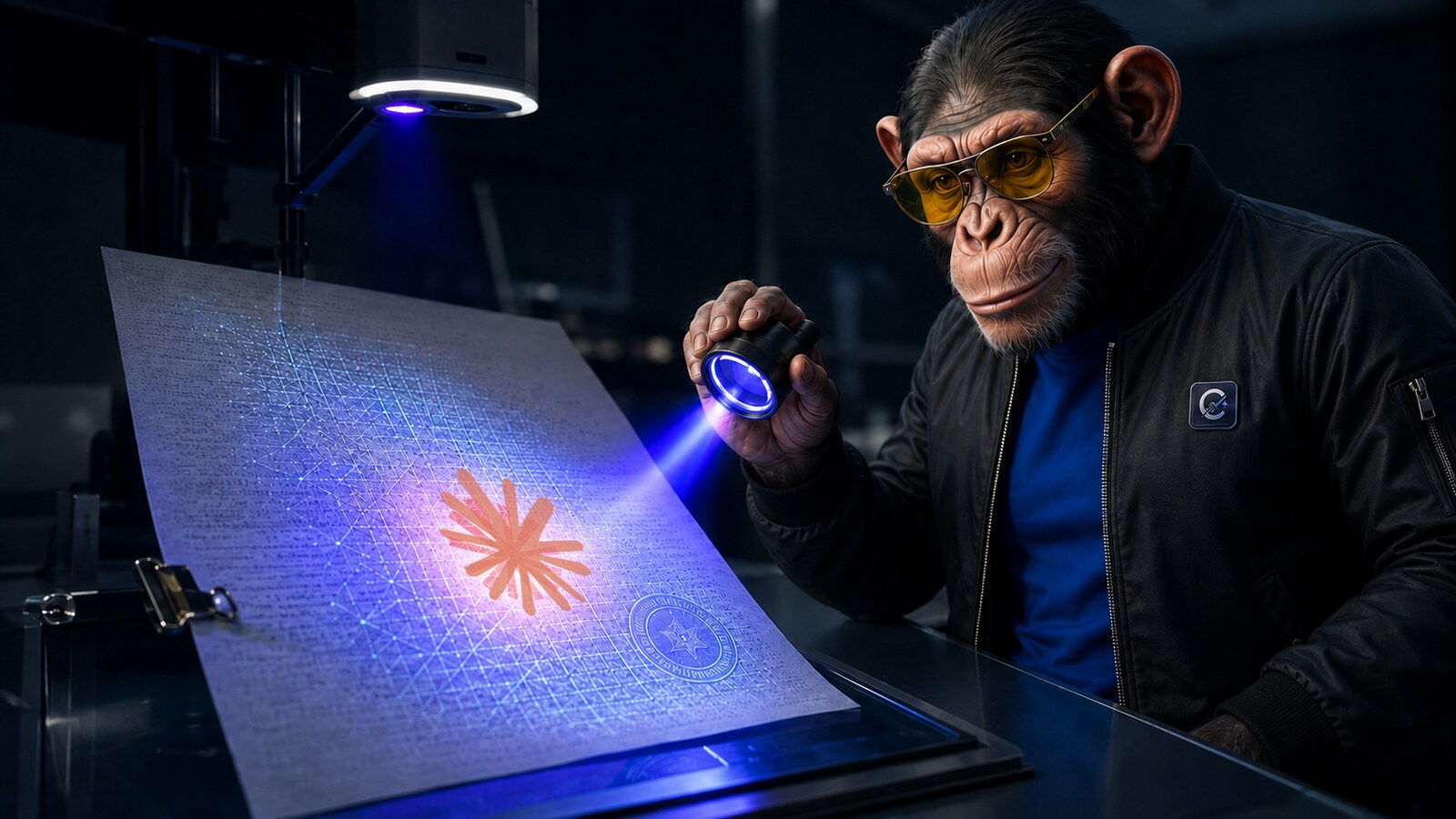
This evidence-based analysis is based on Anthropic and EU documentation checked on August 12, 2026. Choosely could not independently test the watermark because Anthropic has not released a public detector or model-level coverage table.
On August 10, 2026, Anthropic disclosed plans to introduce invisible, machine-readable marks into content produced by supported Claude models. The text watermark will be woven into generated wording, while supported files will carry signed provenance metadata. The marks will apply worldwide, not only in Europe.
That much is confirmed.
The louder claim spreading online is that Claude is already secretly watermarking every answer, document, and line of code it produces. Anthropic's own documentation does not support that conclusion. Its current mainstream models launched before the new August 2 cutoff, and support for those older models is still described as “in progress.”
The useful answer sits between corporate reassurance and internet panic. Anthropic is building a real global marking system. There is no evidence that the marks reveal your account or transfer ownership of your work. There are, however, reasonable concerns about detection, false assumptions, and what happens when Claude merely edits something a human wrote.
What Anthropic actually announced
Anthropic signed the EU AI Act's Article 50(2) Code of Practice on Transparency of AI-Generated Content. Its official support page describes two different marking methods.
The first is an imperceptible watermark embedded directly into text generated by a supported Claude model. Anthropic says the watermark travels when text is copied and pasted and may survive some editing. It also says the mark does not change the meaning, quality, or readability of the response.
The second is signed provenance metadata attached to supported files. Anthropic names SVG, PNG, and JPG as examples and says the metadata follows the C2PA open standard. This can indicate that Claude processed the file and whether the signed file has since been tampered with.
Those methods are easy to blur together in a headline. They should not be.
| Output | Anthropic's stated marking method | What is confirmed |
|---|---|---|
| Generated text | Imperceptible embedded watermark | Travels with copied text and may survive some edits |
| Supported files | Signed C2PA provenance metadata | SVG, PNG, and JPG are named as examples |
| Word, PowerPoint, spreadsheet, or PDF files | Not specified by file type | Anthropic has not published a complete supported-format list |
| Personal account identity | No documented field | No evidence the mark identifies the user, prompt, or conversation |
Anthropic says marking will cover supported models across Claude, the Claude API, Claude Code, Claude Cowork, and Claude Tag. It also explicitly says embedded text watermarks will apply when supported models are accessed through AWS, Google Cloud, or Microsoft Foundry. Signed file metadata may not be available on every platform. Once a model supports marking, the policy applies wherever Claude is offered worldwide.
Europe wrote the rule. Everyone gets the label.
Is Claude watermarking current responses now?
There is no official basis to say every current Claude response is already watermarked.
Anthropic says models launched in the EU on or after August 2, 2026 will support marking from launch. It separately says it is working to add support to models released before that date.
That cutoff is a legal boundary, not evidence of an engineering switch being thrown on August 2. The EU rules provide a transition period for earlier models. Anthropic has tied its rollout language to that compliance timetable, which is why launch dates matter here.
The current model lineup falls into that earlier group:
| Current Claude model | Launch date | Status under Anthropic's wording |
|---|---|---|
| Claude Fable 5 | June 9, 2026 | Existing-model support in progress |
| Claude Sonnet 5 | June 30, 2026 | Existing-model support in progress |
| Claude Opus 5 | July 24, 2026 | Existing-model support in progress |
| Claude Haiku 4.5 | October 2025 | Existing-model support in progress |
These dates come from Anthropic's Fable 5 announcement, Sonnet 5 announcement, Claude app release notes, and current model documentation.
Anthropic has not published a model-by-model rollout table showing that any of these existing models have been retrofitted. It has also not released a public detector that would let Choosely independently check current output.
The careful conclusion as of August 12 is straightforward: the program is real, future supported models will be marked from launch, and the existing fleet is scheduled to follow. The precise present-day coverage remains undocumented.
That is less dramatic than “Claude is secretly tagging everything.” It is also what the evidence says.
A watermark is not the same as personal tracking
Nothing in Anthropic's announcement says the text watermark contains a user ID, account number, prompt, conversation link, subscription tier, or other personal identifier.
Anthropic says detection will show that content may have been processed by Claude. It does not say a third party will be able to trace the content back to the person who requested it.
The distinction matters. A provenance signal can identify a tool's involvement without identifying its user. Treating those as the same thing turns a legitimate transparency debate into a tracking allegation for which there is currently no evidence.
That does not make every Claude privacy concern imaginary. Choosely previously found a different transparency gap when publicly shared Claude chats and Artifacts became searchable. The lesson is the same: product behavior should be judged from what the system actually exposes, not from the most dramatic version circulating online.
There is still a fair reason to press Anthropic for more detail. The company has not published the technical design, detection method, embedded fields, reliability rate, or independent audit results. Users are being asked to accept that the mark is harmless, imperceptible, and quality-neutral before anyone outside Anthropic can properly examine it.
For a company promoting transparency, that is a slightly awkward amount of opacity.
The real concern is what a detected mark could be taken to mean
Anthropic is unusually clear about one limitation: a positive result will not prove that Claude wrote the original material.
A human could write a report, send it to Claude for proofreading, and receive marked text back. The same could happen after translation, summarization, formatting, or file conversion. Anthropic says a detected mark means the content may have been processed by Claude. That is a much narrower claim than “AI authored this.”
This is where the practical risk becomes serious.
Schools, employers, publishers, clients, and online platforms have a long history of treating imperfect AI-detection signals as verdicts. A Claude mark could be useful evidence of tool involvement. Used carelessly, it could also flatten the difference between writing, editing, translating, and generating.
The reverse is equally important. No detected mark does not prove a person wrote the material. Anthropic says a mark can disappear when text is heavily edited, paraphrased, translated, shortened, or mixed with other writing. File metadata can be stripped by re-saving, format conversion, or screenshots. Unsupported models, platforms, and file types may produce no detectable mark at all.
A detector that produces neither proof of authorship nor proof of human origin needs very careful labeling. Otherwise, the technology designed to add context will create a fresh source of false certainty.
Does the watermark affect ownership?
No ownership change has been announced.
Anthropic's output policy says users own outputs generated from their inputs. A watermark or provenance label records possible processing history. It does not hand copyright or ownership to Anthropic.
Normal copyright questions still apply. AI-generated material may receive different legal protection depending on the jurisdiction and the amount of human authorship involved. The new marking system does not settle those questions, and Anthropic has not claimed that it does.
The watermark is evidence about process. It is not a deed of title.
Why Anthropic is doing this worldwide
The trigger is the European Union's AI Act.
Article 50 transparency obligations became applicable on August 2, 2026. The European Commission's guidance says generative AI providers must add machine-readable marks that enable detection of AI-generated or manipulated content. The related Code of Practice provides a voluntary framework for demonstrating compliance, although the underlying legal obligations are not voluntary.
The deadline carries real commercial weight. The European Commission says non-compliance can attract fines of up to €15 million or 3% of total worldwide annual turnover for the preceding financial year. That helps explain the speed of the rollout. Anthropic is not adding marks because August 2 happened to be a convenient engineering milestone.
The policy aim is reasonable. Machine-readable provenance can help platforms identify deceptive synthetic media, reduce impersonation, and give readers more context about what they consume. It may also help prevent AI-generated material from quietly contaminating future training data.
The implementation is harder. Text can be edited, translated, combined, or reduced to a few lines. A mark strong enough to survive those changes must avoid degrading the output or creating a detectable writing pattern. Anthropic says quality will not change, but has not released evidence outsiders can test.
The EU Code also recognizes that no single marking method is reliable enough for every type of content. It generally favors multiple machine-readable layers, such as signed metadata plus an embedded watermark. Free-form text is an exception because it cannot carry file metadata in the same way. For Claude text, the embedded watermark has to do the job on its own.
Online reaction has focused on writing quality, code quality, privacy, academic accusations, and whether users should be able to opt out. Some complaints assume personal tracking that Anthropic has not described. Others land on the stronger question: why should a paid user accept an invisible modification without a public detector, technical explanation, or clear model-status page?
That concern is difficult to dismiss.
Anthropic is not the only provider moving this way
Claude's announcement is part of a wider provenance shift, although providers are not marking the same outputs in the same way.
Google DeepMind already uses SynthID to watermark text generated through the Gemini app and web experience, as well as supported images, audio, and video. OpenAI uses C2PA metadata and SynthID for supported image outputs and has expanded its public verification tools to images and audio. OpenAI's current public documentation does not describe an equivalent watermark across ordinary ChatGPT text.
That context matters. Anthropic is not inventing AI provenance or acting under a rule written only for Claude. The distinctive part is its commitment to embed a mark across supported Claude-generated text worldwide, including professional writing and code surfaces.
What Claude users should do now
Most users do not need to stop using Claude. They do need to be more precise about what the change means.
Writers and professionals: Keep your original drafts and revision history when authorship matters. If Claude edits human-written material, a future positive mark may show processing rather than authorship. Your working history will provide better evidence than an AI detector.
Students and educators: Follow the institution's AI-use policy and disclose assistance where required. Schools should not treat a Claude mark as standalone proof of misconduct. Anthropic itself says the signal is not conclusive.
Businesses: Update AI policies to distinguish generation, editing, translation, and formatting. A binary “AI used” label is too crude for real work. Procurement and compliance teams should also ask Anthropic which models and file types are currently covered.
Teams choosing where Claude fits into day-to-day work can also read Choosely's ChatGPT Work vs Claude Cowork comparison. The watermark question does not decide the broader product comparison, but it now belongs in governance and disclosure policies.
Developers using Claude models: Expect marking to operate at the model level across supported surfaces. Anthropic tells builders to assess their own Article 50 obligations and says more technical guidance is coming. Until that arrives, do not promise customers that every output can be reliably detected.
Anyone evaluating a detector: Treat both positive and negative results as signals, not verdicts. Ask which model versions, passage lengths, languages, transformations, and file formats were validated.
Choosely's verdict
Anthropic's marking program is a defensible response to a real problem. People should have better ways to identify synthetic content, especially when it is used to deceive, impersonate, or influence public debate.
The rollout has created a transparency problem of its own.
Anthropic has announced a global, invisible marking system without publishing its technical method, current model coverage, detector, reliability data, complete file support, or an opt-out position. That does not make the system sinister. It does make firm assurances premature.
For now, Claude users should ignore claims that every current output secretly identifies them. There is no evidence for that. They should pay close attention to how institutions use future detection results, because “processed by Claude” and “written by Claude” are very different findings.
Anthropic can settle much of the concern by publishing a live coverage table, a usable detector, clear data-field documentation, and independent accuracy testing. Until then, the marks are real, the rollout is incomplete, and several of the most important questions remain unanswered.
Frequently asked questions
Does Claude put an invisible watermark in its text?
Supported Claude models will embed an imperceptible, machine-readable watermark directly into generated text. Anthropic says it travels with copied text and may survive some editing. Current mainstream models launched before the August 2, 2026 cutoff, and Anthropic says support for those existing models is still in progress.
Are all Claude responses watermarked now?
Anthropic has not confirmed that. It has not published a current model-by-model coverage table or public detector. Its documentation guarantees launch-day marking for models released on or after August 2, while describing older-model support as work in progress.
Does Claude watermark Word documents and PDFs?
Anthropic has not published a complete file-type list. It names SVG, PNG, and JPG as examples of supported files receiving C2PA provenance metadata. Current support for DOCX, PDF, PPTX, and spreadsheet files is unclear.
Can a Claude watermark identify my account?
There is no evidence that it contains a user identity, account, prompt, or conversation reference. Anthropic says detection indicates that content may have been processed by Claude.
Does Claude watermark code?
Anthropic says embedded watermarks will apply to all generated text from supported models and includes Claude Code among the covered products. It has not separately documented how reliably code can carry the mark or whether different programming languages behave differently.
Can editing remove a Claude watermark?
Anthropic says some editing may preserve the mark, while heavy editing, paraphrasing, translation, short passages, or mixing with other material can make it undetectable. A missing mark does not prove that Claude was not used.
Can I opt out of Claude watermarking?
Anthropic has not documented a user opt-out. Because the text watermark is applied at the model level, its current description suggests it will not be a normal product setting once a model supports it.
The Change Brief
Get the week’s AI changes in one clear read
Pricing moves, tool launches, free-tier changes and practical stack updates, filtered for people who actually use these tools.
Stay ahead of AI without following it all day. We’ll send you what matters each week.
Continue reading
Related reads
AI Strategy
Are Claude Chats Private? How to Check Whether Your Shared Chats and Artifacts Are Public
Private Claude chats were not leaked. Publicly shared conversations and Artifacts became searchable, exposing a gap between what Share technically meant and what users reasonably expected.
AI Tool Recommendations
ChatGPT Work vs Claude Cowork: Which AI Work Agent Should You Actually Pay For?
ChatGPT Work and Claude Cowork can both research, use files and connected tools, and return finished professional deliverables. The better choice depends on where your work begins and what you need back.